Agent-to-Agent Integrations in Media Planning: Replacing Brittle APIs
Agent-to-agent integrations are fundamentally transforming how media planning ecosystems connect, replacing brittle, legacy API workflows with dynamic, autonomous AI communication. Instead of enduring months of custom engineering, media buyers and sellers are deploying specialized AI agents that can talk directly to platform infrastructure, compressing timelines and completely redefining how advertising capabilities are brought to market.
Key Takeaways
- Traditional API workflows in media planning are often brittle, highly structured, and take up to a year to fully integrate across platforms.
- Agent-to-agent integrations allow autonomous AI agents representing buyers, sellers, and platforms to communicate directly.
- New technical integrations that once took 12 months can now be established in a matter of weeks.
- By automating repetitive tasks and system handshakes, AI liberates human media planners to focus on high-level strategy and creative connections.
The Death of Brittle APIs in Advertising Technology
For decades, the plumbing of the ad tech and media planning industry has relied on Application Programming Interfaces (APIs). While APIs successfully allowed different software systems to talk to one another, they came with severe operational limitations. These pipelines were notoriously rigid. Building a new connection between an agency's planning tool, a measurement vendor, and a streaming publisher's inventory management system required extensive, highly structured custom code.
If a stakeholder wanted to alter the data schema or adjust the workflow parameters, it triggered a massive engineering overhaul. These brittle API workflows created massive bottlenecks across the entire media ecosystem. Campaigns were slowed down by technical friction, and expanding capabilities meant getting stuck in long software development queues. In an era where media consumption habits and audience behaviors shift by the week, waiting a year to deploy a new data integration became completely untenable.
The Rise of Autonomous AI Agents in Media Ecosystems
Enter the next evolution of enterprise software: agent-to-agent architecture. As agencies, streaming platforms, and measurement providers increasingly adopt artificial intelligence, they are moving past simple chat interfaces and deploying autonomous agents designed to execute complex operational tasks.
In this new paradigm, an agency has an AI agent tasked with optimizing campaign delivery and uncovering audience insights. On the other side, a publisher or streaming platform has an inventory agent managing available ad space and pricing. Rather than forcing human engineers to write bespoke middleware to connect these two systems, the buyer's agent and the seller's agent negotiate, exchange parameters, and execute workflows natively.
This shift collapses the traditional timeline of capability development. Tasks that historically required twelve months of cross-functional engineering can now be stood up in a matter of weeks. The agents interpret intent, translate data formats on the fly, and handle the routine heavy lifting of cross-platform execution.
Compressing Timelines and Accelerating Innovation
The speed enabled by agent-to-agent communication creates a massive competitive advantage for modern media organizations. When technical integrations drop from a year-long project to a sprint measured in weeks, product roadmaps radically expand. Companies can test niche inventory sources, experiment with dynamic audience segments, and pull in new performance signals almost instantaneously.
This velocity is especially critical as media planning transitions from static annual forecasts into real-time optimization loops. If an AI reporting layer surfaces an unexpected insight—such as a specific creative performing exceptionally well with a niche audience on a particular streaming service—an agentic workflow can immediately feed that insight into downstream activation systems. The barrier between discovering a trend and executing upon it effectively vanishes.
Reclaiming the Human Element in Media Planning
A common fear surrounding the rise of automation and AI is that it devalues human expertise. However, industry leaders point out the exact opposite effect: automating the administrative machinery actually unlocks more time for high-value human work.
For years, media planners, agency executives, and account leads have spent the vast majority of their working hours trapped in operational weeds. Days were consumed by emailing spreadsheets back and forth, validating manual data entry, troubleshooting broken API feeds, and pulling custom reports from half a dozen disparate business intelligence dashboards.
By delegating these repetitive blocking-and-tackling tasks to communicative AI agents, professionals are freed from the spreadsheet grind. This creates space to focus on what truly matters: human connection, brand strategy, creative ideation, and building meaningful relationships across communities. Instead of spending an afternoon wrestling with data formats, a media planner can spend that time brainstorming innovative brand positioning with a client.
Conclusion
The transition from rigid, manual API integration to fluid, agent-to-agent communication marks one of the most significant technical shifts in modern advertising history. By removing operational friction and automating system handshakes, the industry is poised to move faster, test bolder ideas, and deliver superior real-world outcomes for advertisers.
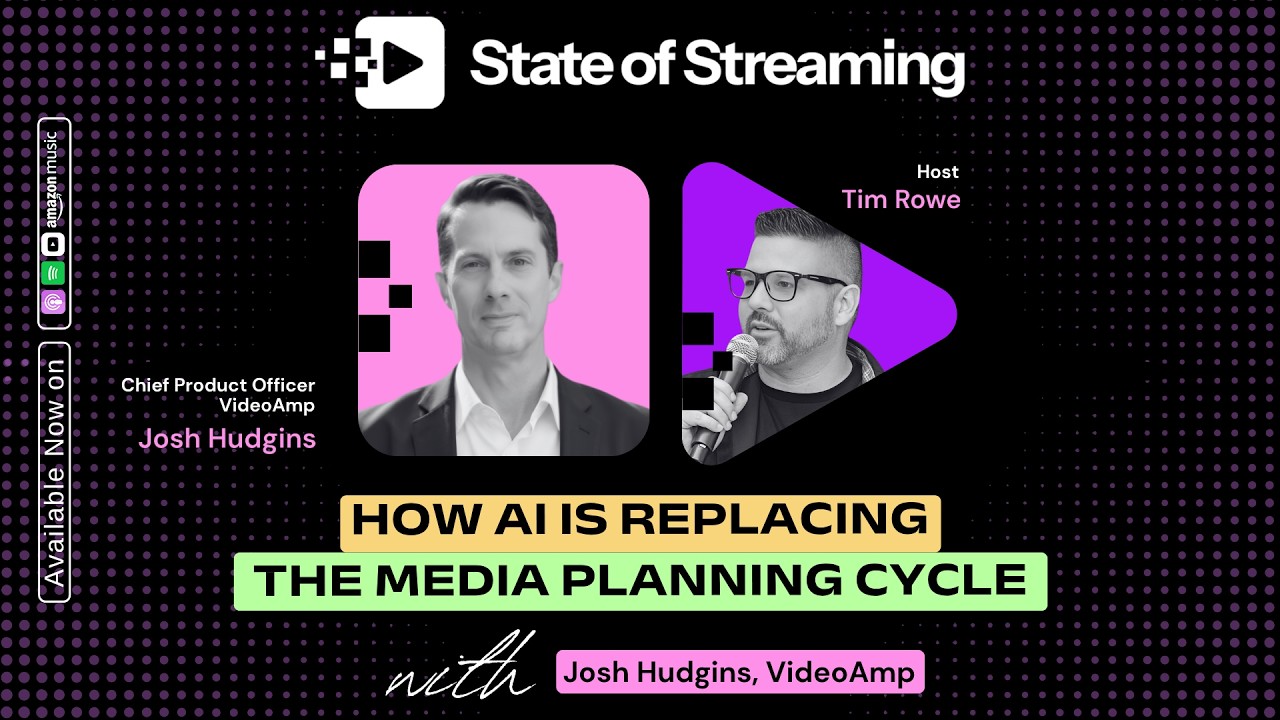
To dive deeper into how artificial intelligence is reshaping performance media, platform connectivity, and campaign workflows, Listen to the full episode of the State of Streaming Podcast featuring Josh Hudgins, Chief Product Officer at VideoAmp.
Frequently Asked Questions
What are agent-to-agent integrations in media planning?
Agent-to-agent integrations refer to autonomous AI systems—representing different entities like buyers, sellers, and media platforms—communicating and executing workflows directly with one another, bypassing manual human intervention and rigid code setups.
Why are traditional API workflows becoming obsolete in ad tech?
Traditional APIs are brittle, highly structured, and notoriously slow to implement. When changes are required or new platforms need to be connected, it often takes months of engineering work, whereas AI agents can bridge these gaps dynamically.
How long does it take to set up an AI agent integration compared to legacy systems?
While traditional cross-platform integrations can take up to 12 months to build and deploy, agent-to-agent system connectivity can drastically reduce that timeline to just a matter of weeks.
Will AI agents eliminate human jobs in media planning?
Rather than eliminating jobs, AI agents automate the tedious operational work—such as moving spreadsheets and managing manual handshakes—allowing human media professionals to dedicate more time to creative ideas, client relationships, and core strategy.