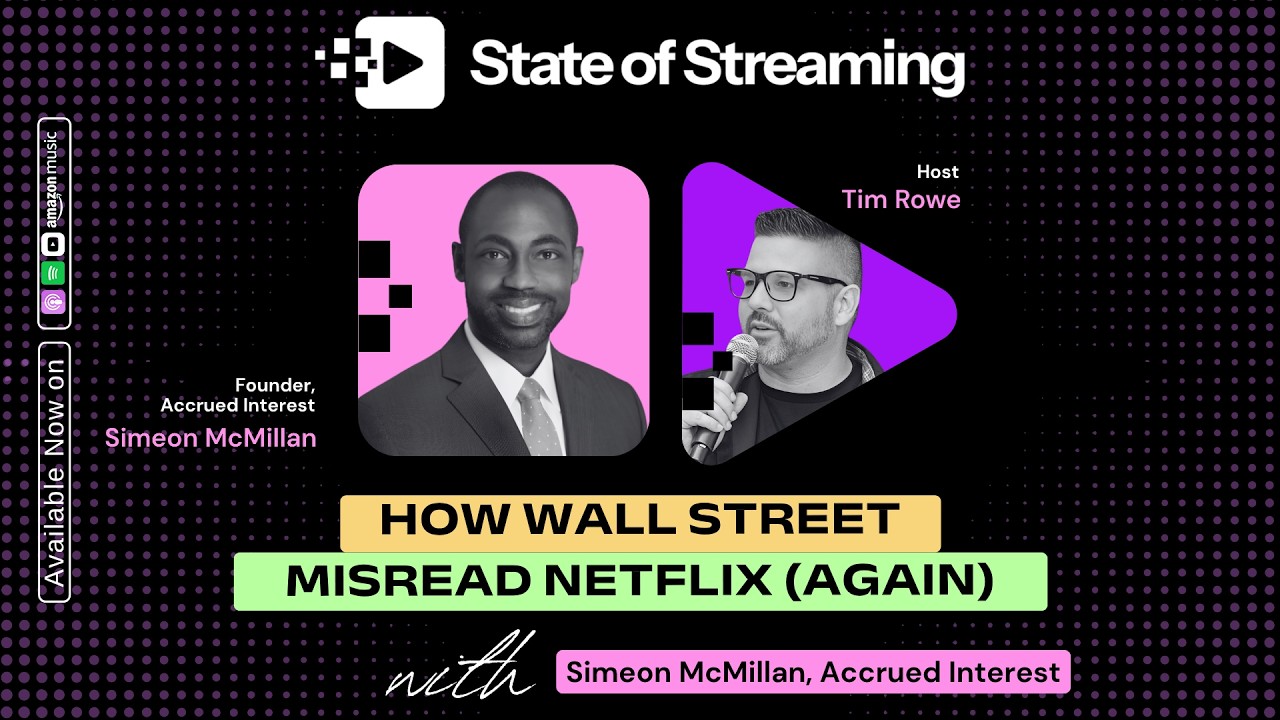
Why YouTube Is Netflix's Real Financial Peer (And Wall Street Misses It)
Wall Street analysts frequently panic over minor fluctuations in streaming metrics, but they are looking at the wrong competitors entirely. By comparing Netflix's financial trajectory directly to YouTube's massive ecosystem, media investors can uncover the true revenue patterns driving modern entertainment and look past misleading engagement panic.
Key Takeaways
- YouTube and Netflix operate in the same global financial weight class, with quarterly revenues consistently within 5 to 15% of each other.
- Wall Street frequently panics over minor fluctuations in Netflix engagement hours while overlooking its superior revenue-per-hour efficiency.
- Unlike traditional media companies, both platforms operate at a massive international scale that resists standard linear television comparisons.
- YouTube's steady growth without traditional hit shows proves that massive engagement doesn't require high-cost prestige content production.
- Revenue per hour of programming is a much stronger indicator of streaming health than raw total watch time.
The Weight Class Nobody Talks About
For years, traditional media analysts have pitted Netflix against legacy Hollywood studios like Disney, Warner Bros. Discovery, and Paramount. While these legacy players struggle with legacy debt, declining cable bundles, and shrinking linear footprints, Netflix has quietly scaled into an entirely different category of media consumption.
However, analysts consistently leave out the most obvious comparison in the global attention economy: YouTube. When you strip away the noise and line up the financials reported on Google's earnings calls, YouTube stands out as the only true peer to Netflix in terms of sheer revenue scale and global reach. Despite Google not breaking out YouTube subscription revenue separately, the ad revenue alone puts the platform right alongside Netflix's quarterly earnings within a 5 to 15 percent margin.
Why Engagement Panic Misses the Mark
Every few quarters, financial news outlets publish alarmist reports about slowing viewership hours or minor dips in engagement metrics for subscription streaming services. This panic usually stems from analysts reacting to headlines rather than reading actual corporate disclosures. Netflix routinely publishes weekly top-10 lists across 90 different countries, providing more granular public data than almost any other media company.
Furthermore, when a platform operates on a massive base exceeding 90 billion minutes of viewing, expecting year-over-year viewership growth to surge at double-digit rates is mathematically unrealistic. There are only 24 hours in a day, and human attention is finite. YouTube provides the perfect blueprint for this reality: it grows at a steady 10 to 12 percent clip year-over-year without relying on traditional scripted hit shows, multi-million dollar pilot episodes, or prestige movie budgets.
Revenue-Per-Hour: The Metric That Actually Matters
Total hours watched make for great headline fodder, but they tell an incomplete story about business health. The real competitive advantage lies in monetization efficiency—specifically, how much revenue a platform extracts from every single hour of programming it delivers.
Over the past several quarters, Netflix has consistently outgrown YouTube in revenue generated per programming hour. As the media landscape shifts toward alternative formats like short-form video, podcasts, and live sporting events, raw watch-time calculations become increasingly obsolete. Netflix has engineered a model where its revenue-per-dollar of content spend continually improves, proving that surgical content investments yield better returns than reckless spending sprees.
For a deeper exploration into how streaming platforms are redefining media valuation, Wall Street blind spots, and the future of television, Listen to the full episode to catch the complete conversation.
Frequently Asked Questions
Why is YouTube considered Netflix's financial peer?
When comparing top-line figures disclosed in Google's earnings to Netflix's quarterly statements, YouTube and Netflix generate remarkably similar revenue totals within a 5-15% margin and run neck-and-neck growth rates.
What is revenue-per-hour in streaming?
Revenue-per-hour measures how much monetary value a platform extracts from every single hour of programming watched, proving a more reliable health metric than raw viewership hours.
Why do Wall Street analysts panic over Netflix engagement metrics?
Analysts often react to sensationalized headlines about minor 1-3% shifts in viewership without accounting for the fact that Netflix operates on a massive global base of over 90 billion viewing minutes.
Does YouTube rely on hit shows to drive revenue growth?
No, YouTube consistently grows its ad revenue at low double-digit rates year-over-year without relying on traditional expensive hit television shows or movies.