

 Spotify
 Apple Podcasts
 YouTube
 iHeartRadio
 How Broadcast Gave Way to Streaming | Matthew Keys, Publisher at The Desk
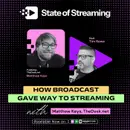
Have a question? Send us a text! Tim sits down with Matthew Keys, Publisher of The Desk, a media outlet covering the broadcast, streaming, and digital media industry that has grown from a hobbyist blog into a publication that industry executives now regularly check — and walk up to strangers at conferences to mention. TheDesk.net started as a survival mechanism. Matthew Keys built The Desk across two different moments of involuntary downtime — first while on paid suspension during a legal si...
Have a question? Send us a text!
Tim sits down with Matthew Keys, Publisher of The Desk, a media outlet covering the broadcast, streaming, and digital media industry that has grown from a hobbyist blog into a publication that industry executives now regularly check — and walk up to strangers at conferences to mention.
TheDesk.net started as a survival mechanism.
Matthew Keys built The Desk across two different moments of involuntary downtime — first while on paid suspension during a legal situation, then again during COVID when a planned job transition went sideways. Thirteen years later, it's one of the few places covering streaming and broadcasting from someone who actually worked inside both industries.
- 0:44 – Why the desk is called the desk: the assignment desk as the unsung hero of every newsroom
- 3:10 – How The Desk started on suspension and grew through COVID
- 5:45 – The StreamTV show moment: from unknown hobbyist blog to recognized industry outlet
What traditional broadcasters are giving away and calling it a "streaming strategy".
Every major local news station now has a 24-hour FAST feed. That's not a streaming strategy — it's content distribution without a monetization model. Matthew breaks down why Nexstar's Haystack investment, the NewsNation experiment, and the broader local news pivot to streaming are all variations of the same unresolved tension between reach and revenue.
- 7:12 – How local broadcasters are addressing streaming: giving the product away
- 8:30 – Nexstar, Haystack News, and what the largest station group is actually betting on
- 10:15 – NewsNation: what national ambition looks like when you're built on local infrastructure
Are sports the only thing keeping cable alive?
Churn accelerates the moment football season ends and partially recovers when it comes back. That's the only thing holding legacy cable bundles together. Once consumers churn out, the data shows they don't come back — they go to FAST, because to them there's no meaningful difference, and FAST offers more options.
- 15:20 – Why sports is the last thing keeping cable subscribers in the bundle
- 16:44 – What churn data shows about former cable subscribers and where they go
- 17:30 – Why FAST is bad at personalization except for Tubi — and why that matters
The FASTpocalypse is coming. Two thousand channels will become one hundred.
The supply glut is real. Advertisers aren't keeping pace with inventory. Reporting and aggregation are still broken. But the people who work closest to FAST all say the same thing: when the consolidation happens, the channel count drops by 95% and what's left looks a lot like peak cable — around 20 channels that any given viewer actually watches regularly.
- 18:10 – Why FAST supply has outrun advertiser demand
- 19:05 – The 2,000 to 100 channel shakeout thesis
- 20:15 – The Savannah Bananas playbook: YouTube first, then TNT, then the CW
The World Cup drew the numbers it did because it was easy to find.
The FIFA World Cup pulled massive viewership not just because of compelling storylines or home-field time zones — but because rights were consolidated in a way that made the product frictionless. No "this game is on Netflix." No market blackouts. Just find it and watch it. That's the discoverability lesson the rest of the industry keeps failing to apply.
- 22:10 – Why the World Cup's distribution model was as important as its storylines
- 23:00 – The Roku bundle as a frictionless access point
- 23:30 – What professional women's hockey and Banana Ball prove about the YouTube-to-TV pipeline
Connect with Matthew Keys on LinkedIn · Matthew Keys on X · The Desk
Thanks to Looper Insights for sponsoring today’s show! Ready to unlock your streaming strategy edge? Head over to mystreamingvalue.com to compare CTV home screens and find out which spaces are worth the most. You’ll even learn exactly why Fox was willing to pay $22 billion for Roku. Stop guessing and start scaling—visit mystreamingvalue.com to get your free insights today!
00:00 - The Big Cable Versus Streaming Questions
02:22 - Why TheDesk.net Is Called The Desk
08:24 - Building Credibility Through Industry Coverage
08:50 - Local News Streams Without Real Revenue
13:07 - What Earnings Calls Reveal About Strategy
17:36 - Churn, Engagement, And Lost Shared TV
20:44 - Peacock And RSNs As Testing Grounds
25:43 - FAST Makes Cable Pricing Hard To Defend
28:59 - Discoverability, Personalization, And Ad Trust
31:52 - Banana Ball Shows A YouTube First Path
33:19 - FIFA Worked Because It Was Easy
34:18 - Where To Follow Matthew Keys
35:20 - Share The Conversation And Send Tips
The Big Cable Versus Streaming Questions
Tim Rowe, State of StreamingWhy are consumers still paying premium prices for cable networks when the exact same programming is free on streaming? And how are local TV stations supposed to survive if they keep giving away their news streams online without making a dime? On this episode, I sit down with Matthew Keys, Publisher of TheDesk.net. We're looking at the evolving business model of local broadcasting, and we ask the question of whether or not Peacock is quietly using regional sports networks as a tech incubator, as testing grounds for their new technology. We also cover what happens when emerging sports brands like Banana Ball skip traditional TV entirely. Make sure you're subscribed to catch all of our weekly coverage now. Onto the episode. Matthew Keys, thank you for joining State of Streaming. I know you're heads down and busy with The Desk quarterly earnings coverage, which has really become a pillar of The Desk. But maybe you could take us back in time. Why is The Desk called The Desk?
Matthew Keys, TheDesk.netYeah, that's a great question. No one's asked me about the origin story of The Desk before. And the the name came from the idea or really, you know, the reality that in almost every newsroom across the country and maybe around the world, stories start with an idea that gets run by an assignment desk. This is oftentimes a position in a newsroom that people don't see on air or they
Why TheDesk.net Is Called The Desk
Matthew Keys, TheDesk.netdon't read about in print or they don't hear about on the radio. But stories, at least they used to kind of live or die by whether they got signed off at the assignment desk. The assignment desk editor was always a very integral part of the process. They would attend the editorial meetings, they would meet regularly with the producers. In television, which is where I started in local television, they would be the ones to dispatch the news crews to different scenes. They'd have a bank of scanners that they would listen to, they'd have different news wires. There was a lot going on at the assignment desk, and they're really the unsung heroes of many newsrooms. Uh, that position has evolved since I exited that part of the industry. I came across a job listing the other day for uh one of our local TV stations that call them story editors or story desk editors. But essentially the role is the same. And I used to think that was just a local TV thing until I moved to a financial newswire in New York and they had a desk. They had an assignment desk. They called it something different, but it was essentially the same function. You know, very common in newsrooms for the assignment desk to be the one that kind of dishes out the stories. So since I'm the Publisher and editor and main writer of a lot of the stories, I tend to play that role, and it's a really hard role to go and figure out what stories are worth people's time and attention, especially in the era of AI summaries, right? And so when I started the website, I was actually on suspension from a company that I worked at because of a legal situation that I was going through, and they were still paying me, but they were paying me to sit at home and not do anything. And I thought, well, you know, when writing is a is an exercise. And if you don't use it, you lose it. It's just like a muscle, you know, it gets kind of old over time. And so I there was nothing that precluded me from writing for myself as long as I wasn't, you know, commercializing it or anything. So originally The Desk, that that's where the name came from, and the website was actually an extension of my personal site. And it was that way for a long time until I acquired the domain name and registered it as a business or part of a business during the pandemic. Can you give us a sense when when was that? When did you start The Desk? How long have you been at this? The desk started in 2013, April of 2013. And original originally it was just a place where I could write stories that I found interesting, right? So I was freelancing for a couple of years, and then I went to go work for a local newspaper. I worked for a business magazine for a while, and then COVID hit. I'd actually left the job at the business magazine right before COVID hit, thinking I could go get a job somewhere else, then couldn't get a job anywhere else. And, you know, by sheer coincidence, again, sitting at home, not a lot to do, started writing more, developed an audience of really engaged executives in the media and entertainment space. And because my background was in broadcasting, I still saw value in covering that side of the industry. And I'm probably one of the few people covering the industry today that has actually worked in it. I started in local television, I went to a major market television station that had some network backing, and then went to New York and got to experience them the huge media landscape that's out there. So to be, it's kind of like I like to equate it to Costco. Like you can't work in an executive level position in Costco unless you've work at the warehouse. Everyone has to cut their teeth at the warehouse. And I think having that experience in local news, and especially on the on the broadcast side, by the way, I was working on on their websites. So I was also in digital. I was right at the start of that evolution from right place, right timing, really. Yeah, I was right at the start of like the signal is no longer the core product. You now have this digital side where people are getting it on their laptops and soon they were getting it on their phones. I started a year after the iPhone came out. And so we were thinking about how do we tap into the power of social media? How do we harness the fact that every website is now an app, right? And it's in people's pockets. And to have that experience and then carry it through to now covering the industry with an insider's perspective, but really on the outside looking in, I think has made The Desk really stand out. And I'll end, you know, this story on this anecdote, which is I started going to industry conferences a few years ago. They were something that were always on my radar, but I just didn't have the ability or the money to go. And I finally got invited to one in San Francisco and went about two or three years ago. And when I would meet people, they did not know what The Desk was. Fast forward to just a few weeks ago, getting back from Stream TV show in Denver, which I used to write for that company. So to be able to go to their conference was really nice. I had people walking up to me that I didn't know that knew my work. And so it was really validating to have evolved The Desk from what was really a hobbyist blog 13 years ago into a media outlet that people regularly check for reliable, you know, news and information on that part of the industry.
Tim Rowe, State of StreamingI think it's pretty awesome. And the great little moment in time, the inflection point of it shifting from being a hobbyist blog to kind of having your hand forced a little bit in all right, am I going to take this serious? Am I going to go all in on The Desk? And you have, and the coverage has been great. We love to reference it at state of streaming. I'm curious because you've shared some of it already through behind the scenes perspective. How is the shift to streaming? How is it maybe more broadly as a business? How has that impacted local news and broadcasting?
Matthew Keys, TheDesk.netWell, I think you have a lot of traditional broadcasters that are still trying to figure out how to crack the streaming nut. And the way that they've addressed
Building Credibility Through Industry Coverage
Matthew Keys, TheDesk.netit right now is to just give away the product, right? So every, at least in the US, every major local news producing station has a 24-hour feed on one of those platforms, right? And in fact, you can probably find them on more than one platform. One of the biggest outliers is Nextar Media, which is the largest owner operator of commercial television stations
Local News Streams Without Real Revenue
Matthew Keys, TheDesk.netand could potentially be even larger depending on how a court case shakes out. However, they have an interest in an app called Haystack News. I believe they made a financial investment in that not too long ago. A lot of their material is produced through Haystack News, and I think they're trying to use that app as kind of a testing ground to see what they can really do on the streaming side. Is anybody making money from local news on streaming? No. I don't think anybody is making money on local news from streaming. Otherwise, that would come out in the earnings calls and in the earnings reports a little bit more than it does. The reality is that for local broadcasters, the signal, the over-the-air signal, is still what they consider to be their strongest asset. And that inventory on those local news streams continue to go unfilled. Now, how do we how do we fix that? You know, that's not really my lane to play in. Clearly, I have some thoughts on the way that the industry could kind of start to capitalize more on local news. But I actually think that the strategy of let's give it away for free and let's make it distributed everywhere, that's a really good strategy. What's holding them back is they haven't built on that. And that's the next part of the step. You know, the the other part of the equation is that every broadcaster that I can think of is on YouTube, and they're not really maximizing that to the fullest potential either. And they've turned over their TikTok presence to their reporters, which is smart. But again, how do you capitalize on that? So they're still trying to figure that part out, and they really need to figure out that part a little bit quicker because their biggest competitors are not the other stations in town anymore. Their biggest competitors are digital native, digital first news outlets, some of which only have one person running them coming into their communities and saying, you know what, you don't cover our city very well. We're here, we think we can cover it better. And then all of a sudden the ad dollars start flowing to them. And a lot of times these independent publications that pop up, they don't have the same values, journalistic values, they don't have the same ethics, they're not trained reporters, they just see an opportunity to come in and tell stories, and they're running away with that opportunity. And so that's the real competition on the local news side. Where does streaming fit into all of this? Well, because everybody's got a smart TV now and everybody has a TV in their pockets and you know on their desks, there's a tremendous opportunity to reach people beyond the conventional 30-minute newscast that airs at five, six, ten, and eleven. You know, now you're always on. And to the credit of some broadcasters, there are some broadcasters that are trying to do more on their stream. We have a television station here in town in Sacramento that I watch quite often that has a nine o'clock newscast and actually an extended seven and eight o'clock newscast now on their app, where the station over the air is otherwise in network programming, airing a network-backed morning news program.
Tim Rowe, State of StreamingInteresting.
Matthew Keys, TheDesk.netYou know, they don't market that as as well as I think they could. And I I don't have any insight into how well that's performing for them, but at least they're trying. And I think the you know the next step is how do we actually generate some real money behind this? Because if you don't, if you're not making money off of it, you can't then reinvest in that part of the process. And that's really important right now.
Tim Rowe, State of StreamingIt is more important than ever. And we're in earnings season, and I know that that's a big piece of your focus at The Desk. You have really comprehensive coverage of all of the television companies as they're reporting. What are you seeing? Maybe take us take us through The Desk and how you approach that coverage. Give us a sense of what earnings and making uh making the money make sense. What does that look like on your side of the table?
Matthew Keys, TheDesk.netEarnings season is the first time we've ever had a formal editorial calendar at The Desk, which is something that's pretty common in newsrooms. And I guess a sign that we're we're growing up. But there were just so many publicly traded companies that were reporting earnings in the part of the industry that that I cover
What Earnings Calls Reveal About Strategy
Matthew Keys, TheDesk.netthat I had to sit down and create a calendar every quarter. So about two years ago, I sat down and I said, These are all the companies that I would like to cover. Here's where they disclose their earnings on their websites. Some of them have better websites than others. That's really one area where they need to improve. You know, here's how to find them in Edgar. Here's their their ticker symbol. And so there's a list of about 40 or 50 companies that are regularly covered by The Desk with the days that they're reporting. And I used to make that document available to clients. Uh, I've pulled back a little bit just because that document now is, I see it as an asset that could possibly be resold someday to a client or rolled into a subscription product, which we're kind of tinkering with a little bit. But earnings season is really the time when you get remarkably candid comments coming out of executives. It also happens to be the time when you can see a company that's in a growth phase, how well they're growing, how well they're executing on strategies, and where they may be doing something a little bit different. A good example of that, that many of us did not pick up on initially, and it was one reporter that did, is that the EW Scripts Company, a local television broadcaster that also has national networks, they own the Ion network, they disclosed kind of quietly in one of their earnings reports that they acquired Nuvio, which is the company that makes the Tableau DPR. And that was a big deal because now you have a broadcaster that is in the consumer hardware space. And this well predates Fox's interest in Roku on a totally different rate. So there were so many questions that came out of that, which is one, how did we all miss that? And two, why are they interested in Tableau? Right. So what you get out of earnings season is you get executives that do conference calls. Now a lot of them are doing moderated calls. Netflix is a good example of a company that's doing a moderated call. That's not particularly helpful to my side because the questions that we would really like answer don't often get answered, but you get a tremendous amount of data. Almost everybody reports their overall revenue. A lot of them report, you know, what their net revenue is. We're starting to see differentiated data on the average revenue per user side. We're starting to see streaming companies focus more on engagement than user growth, which to me is a signal that growth in a lot of these companies has stalled out. Netflix is a great example of that. So Netflix used to offer some pretty good granular regional data. And when you would download that Excel spreadsheet on a quarterly basis, you would see that in the territory that they called UCAN, which is the US and Canada, their subscriber base kind of stalled out at like 75 million. It wasn't really growing. Growth was in other markets. But the problem with that growth is that those other markets, like Asia Pacific, the average revenue per user was lower. So their business was actually stronger here with fewer subscribers than overseas, where their subscriber count was growing, but their revenue was not. And, you know, we started picking up on that and reporting it. And I think other companies were starting to do the same around the same time. And all of a sudden, Netflix executives said, we're shutting that down. We're not disclosing subscriber count anymore. And now you've got other companies that have done something very similar. So I think growth in streaming has largely peaked, at least in the most mature markets, which includes the US. And now you're starting to see a shift on engagement, where even some of the engagement numbers are being clawed back a little bit. And what that indicates to me is that among premium streaming products where their scripts a subscription is involved, they're now starting to see this trend where you'll sign up for Netflix for a few months and then you go to another service. Or unless it's part of a bundle or a free offering, consumers really scrutinize whether they need to take it or not. You know, the biggest problem that doesn't really get discussed with that is that television is now shifting from something that used to be a communal shared experience in this country where everybody sat down to watch the same programming at the same time because they had to, unless they maybe recorded it on a VHS tape. But for the most part, you know, TV was a live viewing experience. And because there were so fewer choices than there are today, it was even more of a shared experience. You know, Ellen coming out in the 90s was there were watch parties for that. That was a huge appointment viewing. Sure. That was appointment viewing because it was so unusual on television at the time to have a a celebrity with that kind of star power, you know, come acknowledge a
Churn, Engagement, And Lost Shared TV
Matthew Keys, TheDesk.netpart of their personal life, you know, that was at the time it was really big. Now, you know, that that same type of event, you know, obviously thinking on that has evolved quite a bit in a very good way over time, but somebody doing that now on a Netflix show doesn't pack the same punch. And people experience that at different times. In our household, we wind up watching shows really late. I'm just now starting to watch Pleuribus, and it's been out for months. And I it's just because I see interviews on the daily show with the people that are on the show, I see the clips, and I'm like, this is a show that I need to check out, but that's not a shared viewing experience. So we're losing a little bit of our cultural identity, which to a large degree, at least in the US, was rooted in television for decades. You know, I always consider that to be a very special part of the industry, and it's it's been sad to see that kind of slip away. What's replaced it are viral social videos on platforms like TikTok and YouTube. You know, and I think that's what's reflected in our news too. When you turn on the local news and you hear about an influencer who went to a watch party, a FIFA watch party, you know, in San Francisco, and you're like, I don't know who this person is. You know, that might be a generational thing on my end, but I think a lot about that, about like the shared cultural experience and how we're losing that. And the best people that the companies that are in the best position to bring that back are the ones that are still invested in linear television. They are the broadcasters. And that's why I think they're a really fascinating side of the company of the business to cover. And that's why we cover their earnings too. I mean, everyone's focused on their earnings right now because there's so much on the regulatory side that is influencing the day-to-day operations of these broadcasters from the type of content that they can air on their on their signal to whether they can grow larger or swap assets or have more market concentration through things like duopolies, which is one broadcaster owning more than one station in a market. There's a lot of momentum behind the broadcast side. On the streaming side, there's a lot of changes happening on the streaming side. And then everything else trickles down from advertising to marketing to data to intelligence. It all feeds into it. So this is a really exciting time to cover the industry.
Tim Rowe, State of StreamingDefinitely. And you teed us up perfectly for the next piece that I'd like to talk to you about. It seems like the the final bastions of appointment viewing are Love Island, Dancing with the Stars, and Live Sports. And you have thoughts about how Peacock is leveraging RSNs. Obviously, recently uh announced that NBCU being spun off from Comcast. Do you have thoughts on how Peacock has approached live sports, specifically the replacement for regional sports networks? Can you give us some inside baseball on that? I'll put Nintendo.
Matthew Keys, TheDesk.netWe were talking a few months ago. We took a call, background call about this, and I I just kind of I have a lot of stream of consciousness thoughts, right? If you follow me on LinkedIn, you'll see them play out in real time because I write through it
Peacock And RSNs As Testing Grounds
Matthew Keys, TheDesk.netand then have to go back and edit them from time to time. So this was one of those those thoughts that just kind of popped into my head, which is we're we're in a market. I'm in Sacramento, so we are in a market where NBC owns our regional sports network, where our Sacramento Kings play on cable, which is becoming rarer these days, right? That their games are on cable. That their games are on cable, right? They're on Peacock too, but you have to pay a premium to get access to them. And we also happen to be in a Comcast market, so that has a little something to do with it. Comcast owned a handful of regional sports channels. They were under the Comcast Sportsnet brand. They eventually became NBC Sports. And long story short, they operate four regional sports networks. One in Boston, one in Philly, which by the way, that Philly one's gonna get really popular thanks to LeBron James coming to town, one in San Francisco, and the other one's called NBC Sports California, which covers Northern California but is really a Sacramento RSN. And what occurred to me was that I was seeing a lot of media coverage about innovation coming to Peacock and the way they're covering NBA games, as if NBC hasn't been offering NBA games for years and they were just kind of manifesting these new innovative approaches to bringing those games to life on Peacock. A lot of that actually started at the RSN level. They have been airing NBA games. They do it in San Francisco, they do it in Boston, they do it in Philly, and they do it here in Sacramento. And some of the things that were coming to Peacock actually originated at the RSN level. And so I think having those four RSNs gives NBC the ability to try different things, to use them as an incubator, and then bring the successful ideas to the broadcast network. So it's high reward, very low risk. Because if you have an idea that you trial at a Sacramento Kings game, it only gets viewed in Sacramento, you know, and to those who have League Pass who are watching the Kings, which is probably Probably not very many people, let's be honest. But then if it does work out and you do see a strong response from fans, then you try it in Boston, then you try it in Philly, then you try it in San Francisco, and eventually you bring it to the network. Or maybe you just bring it straight to the network. So, you know, as a business, experimentation obviously comes with risk, but I think the risk is lower when you start it at the local level and then you bring it nationally. So to retain those four RSNs, first of all, they draw strong viewership in the markets that they serve, almost all of which are served by Comcast. They're also available on Peacock, so you don't necessarily need to have Xfinity TV to get them anymore. And they serve as a place where people can experiment with different technology where talent can be nurtured. And then you can keep that within the family by bringing it to the network. And I brought up basketball as one example, but NBC also has baseball now, and they have baseball rights in a lot of those markets, including ours. Hockey, you know, I don't know how much they're going to do with hockey in the future, probably not much since those rights are locked in for another couple of years. Soccer, they have soccer rights, they have rugby rights in our market. So there's a lot, you know, and they can also go, what are the sports that are generating interest at a local level? And maybe we should pursue those rights, you know, for Peacock or for NBC. Or now they have the, they revive the NBC Sports Network. So I think they're great little incubators and testing grounds for different things that could eventually come to network because some of the things that I saw being promoted is like this is a really cool thing that NBC is now doing for their basketball. They've been doing here for a while, and they've been building on that momentum here for a while. They got rid of the stuff that didn't work and they kept the stuff that did. And I think you're going to continue to see that happen. I think you've got something there.
Tim Rowe, State of StreamingAlso, thinking about those markets, it it does represent a pretty significant percentage of the U.S. population. So you're getting a little bit of a scaled test in those markets. You've got different demographic diversity and in the regionality of those things. So it would seem like kind of the perfect incubator for exactly what you described. I'm curious your take on FAST. We've focused so much of this conversation on the evolution of TV, behind the scenes, what we see on screen. What are your thoughts as a replacement to traditional cable networks? Is that the role that FAST plays?
Matthew Keys, TheDesk.netYeah, I'll answer that question with a question, which is what's what's really the difference between AE on the cable side and an A and E spin-up channel on FAST? Like what's the difference? Just how I got to it, I guess. Well, I think the difference also is that one is subscription-based and the other one is free. But when you look at it just from the programming and even the scheduling, it's essentially the same. You know, AMC is a great example of this because they've they've made a lot of buzz about their streaming
FAST Makes Cable Pricing Hard To Defend
Matthew Keys, TheDesk.netproduct over the past few quarters. And they've talked a lot about the value that free ad-supported streaming brings back to AMC Plus specifically, and not so much the cable networks, but the programming is really identical. You know, and some of the strongest programming that AMC offered in the past is now on their fast channels. The Walking Dead universe is a fast channel. AMC Thrillers is a thing. I believe Shutter has a fast channel. You know, the lines between what a channel is for purposes of content distribution and soon advertising is getting really blurry. So my question is, why are people still paying a premium to access programming on AMC, on AE, on History Channel, when that same programming and complementary programming like it is available for free on Pluto, on Roku Channel, on Samsung TV Plus, on Tubi. And consumers are asking them that same question. They're asking themselves the same thing, which is why are we paying 40, 50, 60 bucks to watch AE to watch History Channel when a lot of that same programming is now on free ad-supported streaming. It's also on broadcast TV. There are multicast channels that offer the AE library. Weigel and Sinclair and Scripps are, you know, have acquired some of the AE global media library for their own broadcast channels. So the barrier to access is really low. And yet these cable channels still exist. But consumers are turning away from them. And when you look at the churn rates, right, churn accelerates when football season goes away. And some of those companies get a little bit of that business back when football season resumes. But sports is really the one thing that still puts people on cable and cable news and the older demographics. So if you're a company that doesn't offer that, you should be looking at fast, you should be looking at broadcast, you should be looking at YouTube as your content distribution channels, and you should be doing everything you can to monetize around that idea because that's where the former cable consumers are going. There's so much data that shows that once they churn out of cable TV, they take up fast. Because to them, there's no difference. Actually, it's better because they get more options, right? You get more channels that are programmed the same way that carry the same advertising in the same style. Is there too much choice? Yeah. It seems like discoverability becomes the challenge then. Yes. Fast is really bad at personalization, except for Tubi, but Tubi good is good at personalization on the on-demand side, which is why 90% of their viewing takes place in their on-demand catalog. There's so much content that one of the biggest challenges with search and discovery, right? When we talk about the issues that search and discovery presents, it's how do we take all of this content? Because the data is there, the metadata is there. You can go buy metadata from a company like GraysNote or RealGood. And how do we take this and then create a product that will give people more of what they want? YouTube has figured this out, but
Discoverability, Personalization, And Ad Trust
Matthew Keys, TheDesk.netthey are holding on to that formula as tightly as they can, which is why YouTube needs to be a place where people are distributing their content. And a lot of them are. But yes, the paradox of choice is real. When I talk with people in the industry about the proliferation of FAST and how there's a ton of supply, not strong demand from the advertisers yet, but that's more because of, you know, there's supply issues, there's reporting issues, there's how does the data gets get aggregated and then reported back to the advertiser. Now we're starting to hear a lot about ad fraud in that space. And I think that ties in quite nicely to it. But when you talk with people that are really focused on fast, they say when the shakeout occurs, we're going to go from about 2,000 linear content channels to around 100. And that seems about right. That when you think of cable at its peak, yeah, that was the John Malone dream. 100 channels was the Yeah, the the John Malone dream of there being 500 channels and something for everybody to watch. We're living that right now. And what we're finding is that people actually pick and choose maybe 20 of them that they watch on a regular basis, maybe 20 of them, and that's spread across different genres. What we're not seeing in Fast just yet is premium sports. We're seeing a lot of niche sports, we're seeing some college sports be offered over Fast. And I think what Kathy Rassenberger and the folks over at Free Life Sports are doing is really interesting. As I wrote on LinkedIn this week, I don't know when this is coming out, but I wrote this on LinkedIn a while ago. I think as premium sports brands are making it harder for fans to track the games and the tournaments and the events that they want to watch, especially the big one, the NFL, right? With all of these like one-off streaming deals with Prime and YouTube and Netflix, there's going to be an opportunity for a smaller sport with good athletes that offer a compelling storyline to come in, deliver their product over fast, and grab an audience. And we're actually seeing that happen right now with the Savannah Bananas.
Tim Rowe, State of StreamingWith banana that's a great example.
Matthew Keys, TheDesk.netBecause 100% of their games are offered on YouTube. On YouTube, yes. For free. My son watches a ton of them on YouTube. And then and now what are we starting to see happen? Those games are now going to traditional television. They have deals with TNT Sports, they have deals with the CW. I believe they have a few one-off deals with ESPN. So the traditional TV ad, but but it started with YouTube and they've negotiated those deals so they can continue to offer them on YouTube because they realize they've got a good, unique product with an interesting story. It's very entertaining. Imagine if all of this stuff was around 20 years ago. Would professional wrestling, would the Monday Night Wars have occurred on TNT and on USA and on Spike?
Banana Ball Shows A YouTube First Path
Matthew Keys, TheDesk.netOr would they have occurred between YouTube and Twitch? That's kind of interesting to think about, isn't it? It is an interesting thing to think about. That's my answer to that. I don't know if that answered your question, but professional women's hockey.
Tim Rowe, State of StreamingAnd that was a it was like a six-month window that they went from being exclusively distributed on YouTube to being in 126 million scripts households.
Matthew Keys, TheDesk.netI just want to I want to raise an I want to raise another quick point, which is we just came out of a tournament that pulled really strong numbers, the FIFA World Cup. And I I think one of the biggest reasons why it generated such strong interest wasn't just the storylines. It wasn't just the game, right? Because a lot of Americans don't really follow soccer, but there were compelling storylines. There were good athletes. It took place here, so the time zones kind of worked out in a way that they have in the past couple of tournaments. But I think one of the biggest reasons why it drew the numbers that it did is that the games were found on one of two places. Yes. You either watched them on Telefundo, which was available on Peacock for 12 bucks, or you watched them on Fox, which you could get, you know, Fox One for $20, or if you had cable or satellite, or you got that Roku bundle, you could get it for cheap or for nothing. So there wasn't
FIFA Worked Because It Was Easy
Matthew Keys, TheDesk.netthis, hey, you got to watch this game on Netflix, you gotta watch this game on CBS, oh, this game isn't available in your market. It was all just there.
Tim Rowe, State of StreamingIt was so here or there's overwatch. It's easy to find.
Matthew Keys, TheDesk.net100%.
Tim Rowe, State of StreamingThat's a great point. Matthew, you're easy to find. It's TheDesk.net. As we sign off here, any closing thoughts? I know we're gonna have a follow-up to this conversation. There's so much that we didn't even get to here today. Any closing thoughts?
Matthew Keys, TheDesk.netYeah, I think what you're doing with your publication is really interesting. It's a it's a pleasure and a privilege to cover this industry, and it's a pleasure and a privilege to watch state of streaming grow. There's a banner running at the bottom of the screen that says like, comment, and subscribe. And if you're somebody that reads The Desk on a regular basis, our publications are very complementary. We covered some, there's there's some difference, but if you're if you're following us both, you're getting a much bigger look, a bigger picture at what's going on in the space
Where To Follow Matthew Keys
Matthew Keys, TheDesk.netacross a bunch of different elements. So it's a pleasure to talk with you and to work with you and to interact with you. I think our publications are very complementary to each other, and I look forward to collaborating further in the future. Same, Matthew.
Tim Rowe, State of StreamingThank you so much for being here. Thanks for this great conversation. If you found this conversation to be helpful, please share it with a colleague or a client and start a conversation of your own because that's what to do. That's what we do this for, is so that you can go forth into the world and lead interesting dialogue with it.
Matthew Keys, TheDesk.netSo until next time, I'll say please send us your stories. Please send us your stories. Come to us with tips.
Tim Rowe, State of StreamingI'm gonna open everyone that's listened this far. You would have heard it in the open. I think that's that's important to get out. Matthew, thank you so much for being here. All right, take care, have a good one.