

 Spotify
 Apple Podcasts
 YouTube
 iHeartRadio
 How An NFL Legend Is Disrupting Sports Streaming | Shawne Merriman, Founder of Lights Out Sports TV
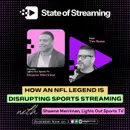
Have a question? Send us a text! Tim sits down with Shawne Merriman, three-time Pro Bowler and CEO of Lights Out Sports TV, to trace the journey from defensive end to streaming architect — and unpack the 5G broadcast technology he's been quietly building for a year that could fundamentally change the economics of live sports delivery. From the field to the production truck to the boardroom — how Shawne was taking notes the whole time. Shawne Merriman started asking camera operators ques...
Key Takeaways
- NFL legend Shawne Merriman transitioned from the gridiron to streaming architecture, launching Lights Out Sports TV as a free home for sports leagues and high school football.
- Programmatic advertising revenue does not scale efficiently for sports properties unless a platform reaches Pluto-level monthly active users, making direct ad sales essential.
- Live sports serve as the top of the funnel in streaming, driving a trickle-down viewing effect to original content and other platform programming.
- Shawne Merriman has spent over a year working with 5G broadcast technology that delivers one signal to millions of devices via low-power towers, solving CDN scaling cost problems and eliminating network congestion.
- Solving the navigational friction of direct-to-consumer (DTC) streaming experiences is the ultimate long-term winning strategy for distribution platforms.
Have a question? Send us a text!
Tim sits down with Shawne Merriman, three-time Pro Bowler and CEO of Lights Out Sports TV, to trace the journey from defensive end to streaming architect — and unpack the 5G broadcast technology he's been quietly building for a year that could fundamentally change the economics of live sports delivery.
From the field to the production truck to the boardroom — how Shawne was taking notes the whole time.
Shawne Merriman started asking camera operators questions during pregame warmups in San Diego. He went from NFL AM at 3 a.m. — the broadcast boot camp that became Good Morning Football — to Fox Sports, ESPN, the WWE Network, and MMA promotion. By the time he launched Lights Out Extreme Fighting on Fox Sports Regionals in the same timeslot UFC vacated, he had already spent years picking up intel at Fubo's offices, sitting in Pluto's LA suite when they had 12 employees, and watching the streaming industry build itself from the inside.
- 2:39 – Why Shawne was asking camera operators questions during pregame warmups
- 4:15 – NFL AM: the 3 a.m. broadcast boot camp that became Good Morning Football
- 6:14 – Pitching Lights Out Extreme Fighting to Fox Sports the day UFC left — and landing it
Programmatic alone doesn't work unless you're Pluto. Direct ad sales is how you build a real business.
FAST looked promising — until Shawne ran the numbers. Programmatic revenue doesn't scale for a sports property unless you're already at Pluto-level monthly actives. The model that actually works: direct-sold ads anchored by live sports, with enough complementary content on the platform to create a trickle-down viewing effect when the game ends. It's the same math Paramount+ is running with the NFL and Landman. Shawne's running a version of it with LXF, Glory Kickboxing, World Poker Tour, and high school football.
- 9:17 – How Shawne learned the FAST business from the inside — including what programmatic actually pays
- 18:32 – Why direct ad sales is the only way to meaningfully grow revenue for a live sports property
- 20:47 – The trickle-down effect: why live sports is the top of the funnel, not the whole funnel
One signal to a million people. The 5G broadcast technology that could change live sports economics.
The fundamental cost problem in live sports streaming: one million concurrent viewers means one million simultaneous CDN signals. Costs scale linearly with audience. Shawne has spent the last year and a half embedded with a company building 5G broadcast technology that flips that model — one signal delivered to millions via low-power tower infrastructure, with no congestion, no dropout, and built-in compatibility with the new chipsets coming to mobile devices. The announcement hasn't been made yet. But the math is already solved.
- 13:51 – Why CDN costs are the live sports streaming industry's biggest unspoken problem
- 14:54 – The 5G broadcast technology: one signal to millions, no congestion, no dropout
- 15:26 – How new mobile chipsets unlock billions of addressable devices as 6G comes online
DTC wins. The platforms that figure it out first take the long game.
Shawne called it three to four years ago: the streaming services that win long term are the ones that solve direct-to-consumer. Not because of price — most consumers will absorb a couple extra dollars. Because of experience. The navigational friction of jumping between Netflix, Paramount+, ESPN, and Hulu is the real complaint. Whoever solves the bridge — seamless access, unified data, direct fan engagement — owns the next decade.
- 11:00 – Why DTC is the only long-term winning strategy in streaming distribution
- 15:52 – How the closed network model lets platforms push products and rewards directly to viewers
- 17:06 – The math problem streaming is now in: responsible scaling, not growth at all costs
How high school football is paving the way for high school sports streaming.
St. Francis vs. IMG Academy. Shawne has exclusive broadcast rights, drone production planned, fan engagement built in, and conversations underway with multiple networks and platforms. He produced the East-West Shrine Bowl practices live for the first time in the event's 100-year history. High school sports is the next frontier — and he's building the production infrastructure for it.
- 21:37 – The St. Francis vs. IMG Academy game: why Shawne expects it to be the most watched high school football game in the country
- 22:00 – Fan engagement as the core production principle: if fans feel connected, viewers follow
- 22:30 – The East-West Shrine Bowl: 100-year-old event, first-ever live stream practices
Connect with Shawne Merriman on LinkedIn · @ShawneMerriman on all platforms · Lights Out Sports TV
Thanks to Looper Insights for sponsoring today’s show! Ready to unlock your streaming strategy edge? Head over to mystreamingvalue.com to compare CTV home screens and find out which spaces are worth the most. You’ll even learn exactly why Fox was willing to pay $22 billion for Roku. Stop guessing and start scaling—visit mystreamingvalue.com to get your free insights today!
Frequently Asked Questions
Who is Shawne Merriman and what is Lights Out Sports TV?
Shawne Merriman is a former NFL star and three-time Pro Bowler who founded Lights Out Sports TV, a standalone free streaming app that serves as a home for live sports leagues, combat sports, and partner programming.
How does 5G broadcast technology solve CDN cost issues in live sports streaming?
Instead of sending out one million individual simultaneous signals for one million concurrent viewers—which causes linearly scaling costs—5G broadcast technology uses low-power tower infrastructure to deliver a single signal to millions of devices simultaneously.
Why is direct ad sales preferred over programmatic ads for live sports properties?
Programmatic advertising yields low revenue scaling unless a platform has massive scale like Pluto TV, whereas direct-sold ads anchored by live sports generate sustainable, meaningful revenue for sports properties.
What is the trickle-down effect in sports streaming?
The trickle-down effect refers to live sports acting as the top of the funnel, bringing in massive audiences who then explore and watch other original programming and series on the platform after the game ends.
00:00 - Why Live Sports Gets So Expensive
03:02 - From NFL Stardom To TV
06:50 - Learning Streaming Through FAST Channels
11:17 - The DTC Discovery Problem
14:17 - 5G Broadcast And CDN Cost Relief
18:52 - Ads, Sponsorships, And The Trickle-Down
22:00 - High School Football With Fan Engagement
23:56 - Where To Follow Sean
Why Live Sports Gets So Expensive
Tim Rowe, Host, State of Streaming PodcastWhat happens when an NFL legend takes the broadcast lessons learned at the NFL Network, Fox, WWE, to solve one of streaming's biggest financial headaches, delivering live sports at scale without breaking the bank? Today, three-time Pro Bowler and founder of Lights Out Sports TV, Shawne Merriman, joins the show. We talk about his journey from the gridiron to broadcast television, how new 5G broadcast tech is changing content delivery unit economics, and how he's building a free home for live sports leagues and high school football. Make sure to subscribe to the podcast so you never miss an episode. Let's get right into the conversation. Shawne Merriman, according to Kids Encyclopedia Facts, you earned the nickname Lights Out during your sophomore year at Frederick Douglass High School in Upper Marlboro, Maryland, when you knocked four opposing players unconscious during a single game before going on to a storied career at the University of Maryland, where you are the number three all-time leader in sacks. And recently you were inducted into their Hall of Fame. In 2005, you were drafted in the first round with the 12th pick by the San Diego Chargers and became one of, if not the most feared, defensive players of your time with the Chargers before retiring with the Buffalo Bills in 2012. You wasted no time and got straight into television broadcasting for the NFL Network, working on air on NFL AM, which later became Good Morning Football, as well as Fox Sports, ESPN, and WWE. In 2019, you launched the MMA promotion Lights Out Extreme Fighting, where you navigated broadcast distribution before launching the standalone Lights Out Sports TV app in 2024 to serve as a permanent free home, not only for the LXF, but for other partner sports leagues such as Glory Kickboxing, World Poker Tour, American Sevens Football League, Chess.com, Street Beefs, Speed Vision, and Outdoor America, as well as Cinniverse and Film Hub. Today, Lights Out Sports TV can be streamed on Roku TV, Fire TV, Apple TV, Google TV, or any Apple or Android mobile device. But you have a feeling that you and your team are just getting started. Shawne, welcome to this day of streaming
From NFL Stardom To TV
Tim Rowe, Host, State of Streaming Podcastpodcast.
Shawne Merriman, CEO of Lights Out Sports TVI appreciate it. Thanks, Tim. Thanks for having me.
Tim Rowe, Host, State of Streaming PodcastAbsolutely. We're going to talk about tech and we're going to talk about economics, but maybe you can take us back in time from your time as a player to time in broadcast to ultimately launching Lights Out Sports. What did you see along the way that it made so much sense for you to take this next step?
Shawne Merriman, CEO of Lights Out Sports TVI've always been an extremely curious person. You know, being fortunate enough to play in the NFL. You're playing on the biggest platform there is, at least here in the States. And um, yeah, I used to walk out before the big Sunday night football games or Monday night games. And I used to walk the field, I would look at the cameras, I would look at the things, the cameras just gliding over the sky cameras, and you know, I would look at how many cameras were on the field. I would walk up to guys pregame, I'll take a lap or two run and I'll stop at the camera guy. I'm like, what are you guys looking at? You know, and so they would just break everything down for me. And I didn't understand why I was asking those questions then. I had no idea. I just thought it was just like I was just curious. I didn't I didn't think nothing of it. You know, fast forward, you know, having having the career that I had in playing in San Diego on such, we just had such a dominant team, you know, between that 2005 and 2010 run. I mean, I got a chance of, you know, Drew Brees just got, you know, into the Hall of Fame. And now, yeah, I went to Antonio Gase's, Ladanian Thomas's, and you know, hopefully be going to Phil Rivers at some point in the next four years since this whole thing reset after coming back. And so we we just had a great group of guys. And when I realized I was done with football, I was ready. So it wasn't one of those things. I did have some injuries that kind of you know showed in my career a couple years and whatnot. But I was it, I was just ready. I knew what I wanted to do. I did a bunch of you know TV work. Yeah, I was on the entourage and Mad TV and Mindy Project. And, you know, I was a first athlete who had really as a current athlete having a show too on Fox Sports called Pro Football Weekly back in the day with Jay Glazer and Eddie George. I didn't have it all figured out. I just was very curious still. Retired, went to the NFL Network, and you know, I wanted to go up there with the main guys on Total Access, but they had Marshall Fogg and Willie McGuinness and Deion Sanders and Michael Irvin. So, you know, they didn't have a place for me. So uh they said, look, we really want you here, but the only thing we got open right now, currently, was a show called NFL AM. And this show shot live at 3 a.m. to 7 a.m. And we had to go back, it was a live show every hour in the hour, and we went top of the blocks from A to E block or F block every hour. So we started over from 3 a.m. to 7 a.m. And I'm telling you, that was a broadcast boot camp for me because if you can do that three, four days a week, you can do anything. And so I was really a part of that show's creation and the idea behind it, and that show later became what we know now as good morning football. So left there, went to Fox Sports, and I was at Speak for Yourself. I was in Colin Cowherst show a few days a week, did that for a couple years, went to ESPN for a show called Sports Nation, and that was a it's an awesome show. Then I was also at the WWE network before when they initially launched, you know, hosting WrestleMania's and Monday Night Raw's, and this is before they went over to Peacock. So man, I it's it's like um I feel a little bit like I lived a thousand lifetimes and in not only being a part of the creation of these shows, but also watch the evolution of traditional broadcast TV and linear TV, and then soon become streaming, right? I got a big mouth, man. I started talking a lot way too early, and I sound crazy because you know I started seeing things. I was calling streaming and how things are going to change. You know, Netflix, I think, one of the first biggest ones kind of really hit it. Then ESPN Plus came out, and so I'm watching this thing unfold, you know, and then going to launch lights out of extreme fighting, you know, at Fox Sports
Learning Streaming Through FAST Channels
Shawne Merriman, CEO of Lights Out Sports TVis the time that UFC had left to go leave Fox Sports to ESPN.
Tim Rowe, Host, State of Streaming PodcastSo a little bit of that void there.
Shawne Merriman, CEO of Lights Out Sports TVYep. And so I I remember going up to uh Eric Shanks, the president of Fox Sports office, and pitching the idea of me launching a MMA organization. I said, hey, I don't know if you guys are looking to get back in the MMA, but by the way, we're coming, right? And they said, Shawne, in fact, we are. So they love the idea, love my pitch deck, and I was leaving out the studio to get in my car, but when I got called back up and pitched the idea, then they sent me over to Foxboards One, and Fox Wars One loved the idea, and then we went over to Fox Sports Regionals, which was Foxboards Western Prime Ticket. We were right up there. Our first show was right up there, viewership-wise, with the Anaheim Ducks. So I think that they that they knew that we had something there that was a well-put-together organization. I spent 20 years in it around the NMA community with Randy Gator being my you know, first person I started training with, Tito Ortiz, Chuck Liddell. So I come from those guys uh in the mid-2000s who were just coming on. So I knew the industry very well, including production, because I've been in all these bigger networks. So we were there for a while, pandemic happened, Sinclair came and bought up the regionals of Fox Sports, and then I went and negotiated a deal with a partnership with FUBO, FUBO TV, FUBO Sports. And we were the top five most watch on FUBO for two years that we were there. And you know, yeah, I think it has soccer the first few spots, BKFC, which is the bare knuckle box, and then it was us. It's so funny going in front of the camera, understanding the business, but now you find yourself kind of sitting at the you know at the table negotiating with all the people that hired you, you know, years before, right? So everything's kind of a a full circle. And FUBO was so innovative, the technology alone, and they started, I think they were some of the first ones that would start doing multi-view, and they were just so advanced. I would fly out, you know, probably once a month or once every other month, and I would work out of Fubo's office one week. See, they didn't know what I was doing. I was picking up, I was picking up Intel, just hanging around the water cooler, we're picking up the tip of the trick, yeah. You know it. And you know, I was fortunate because you know, they they have me as a true partner where I came and you know, I was working with Pam Duckworth, who was the head of content there. And you know, whenever David Gandler, the founder, was was in his office, I'll go, you know, see him. And again, let's back to being curious, right? Just ask him questions of programming. It was so much information I got over those few years, understanding where this thing was going. Now, I started to have you know all these ideas that I wanted to do. I just had a bunch of ideas, but obviously it's not my company. And so, you know, you can pitch things, but you gotta go up the ladder, and they got their own plans, what they got for the quarter or that year, or whatever's most important to them. So everything is a little bit slow. So I was I started thinking, maybe, like, you gotta launch it, you gotta launch your own. You gotta you gotta do something on your own. And I had a lot of ideas because I saw where this space was going and what was happening, and that was next. It was um fast, it was it was fast channels.
Tim Rowe, Host, State of Streaming PodcastWhen was this?
Shawne Merriman, CEO of Lights Out Sports TVCirca yeah, this was uh about two uh about two years ago.
Tim Rowe, Host, State of Streaming PodcastOkay.
Shawne Merriman, CEO of Lights Out Sports TVAnd my idea with with fast was to have partners at a bigger platform to promote and get things out there, but I wanted to launch something where I can start having our fights, you know, what we wanted to in a sense. We still have football as a partner. We still aired on football, but we wasn't live. We were alive on my FaS platform that I built. And so I wanted to understand the FAS space. So I started getting into you know what programmatic ads were, you know, selling on the buy in buy-and sales side, all these other distribution platforms, and how to get your channel up on Roku, how to get your channel up on Samsung, all these other platforms. And I started to understand where the FAS business were going, especially if you weren't personally selling ads, right? Like programmatic is is cool, but you're not ever going to make the revenue that you're looking for from programmatic unless you're Pluto or one of the biggest ones. And Pluto was another one I give a lot of credit to. Um, I remember being in their office when they had 12 employees in LA, you know, Tom and a good friend Ilya over there. When I tell you, man, I feel like I live like 10,000 lives, but I just had a uh just an inkling of foresight that where things were going. And that's kind of how you know I ended up in this spot to where I am now.
The DTC Discovery Problem
Tim Rowe, Host, State of Streaming PodcastAnd you're looking at this too, I know, from a very technical perspective. You you write a lot about the the economics and the sustainability, especially of being able to do something like live sports. Maybe comparing 2019 when you launched LXF to 2026, now where we are, what's true today that maybe wasn't true then that creates a bigger opportunity now in that distribution story?
Shawne Merriman, CEO of Lights Out Sports TVYeah, that there's so many different platforms that you can get on, right? I mean, back when ESPN Plus launched theirs, it wasn't very many things out there. You know, you have Pluto and something like that, but you know, if if they if Pluto had 300 fast channels and didn't have the inventory, you're probably not going to get on there unless you're one of their most most trafficked and watch shows. And so you again, I started learning industry very well. I'm I'm working with or partnering with or talking to every streaming service network there is, and not even just the US, but in the in in the world, you know, China or somewhere in Asia where there's there's no distributional or streaming platform that you know, 10 cent, you know, I started talking to them a long time ago and understand how the the streaming business works in Asia. And so it just it just rolled out to to everything. And I think more so now there's opportunity, but the the biggest issue now is this that there's so many places people have to jump from this place to that place, log into this app, go here. It's just so many places. So you can have something that's widely distributed, but where can you find it? So it that's where it became. And I've always said, you know, and I was calling it, I think probably three or four years ago, and I saw this coming, and you know, I said this, and I it probably looked a little crazy then. But I said the the networks and the streaming service, who's gonna win, are gonna be the ones who figure D to C out. That that's the ones that's gonna really win long term because you do have so many places that you can get content from. And the ones who are ahead of the game and figuring out what the D to C that's the ones gonna win. And and that for the past year and a half, oh, I'm I would say about two years now, that's really all I focused on because people don't have an issue, maybe some, but not everybody. People don't care as much if you raise some a couple bucks, they care about the experience and and them having to log out of you know uh Netflix to go to Paramount Plus or go to ESPN or go to Hulu or or whatever it is, right? They care more about the experience and the navigational purposes, and so we have a technology that fixes all. And you know, it's a it's a one-to-many, one, you know, instead of sending out a uh a million signals, it's one signal to a million that is very cost efficient, you know, offload with these with the CDNs and things like that. And that's all that's the only thing for this past year and a half or so that I've been working on because that's what thing is going. That is, you know, I wanted to, I wanted to be a um kind of a bridge, right? And I think we will be the leaders
5G Broadcast And CDN Cost Relief
Shawne Merriman, CEO of Lights Out Sports TVin in all of this space for our capabilities and what we're capable of doing.
Tim Rowe, Host, State of Streaming PodcastWow. Break that down for a CDN content delivery network. It's kind of the last mile delivery of streaming, if you will. How does that work? What does that mean? Who who are you ultimately building this for?
Shawne Merriman, CEO of Lights Out Sports TVFor several reasons, because we have multiple applications that it can work for. For one, you want to be able to control your own data, right? See everything. You want the data to for you to have access for the data. But also, people understand how expensive it is to deliver content. It's very expensive. And the more people you got watching, the more places it's going, it gets very expensive. And so what we have is a capability to offload and be able to distribute content through this platform at a very, very, I mean, the cost savings that any one of these broadcast networks or streaming platforms would get because you're not sending a million signals out to a million people. You're sending one signal out to a million people, right? Or millions of people that's a low-powered coming from the towers, you know, 40 watt towers. And so we have the capabilities. And also, you know, the new chipsets are coming out, these phones here in the next couple of years. Maybe you might be aware of it. I'm not sure.
Tim Rowe, Host, State of Streaming PodcastBring us up to speed. I I think maybe just the audience probably generally hearing about it, but but talk to us more about what's coming.
Shawne Merriman, CEO of Lights Out Sports TVYeah, and so there's gonna be a new chipset, you know, 5G will still be there, but we're capable of weaving in our technology to to the 5G broadcast, meaning you have access to hundreds of millions, billions of phones that go directly there.
Tim Rowe, Host, State of Streaming PodcastSo taking advantage of a lower latency bandwidth, 5G, and still being able to deliver like a high fidelity premium streaming experience to all of those phones. So as 6G comes online, you're unlocking really truly incremental audiences.
Shawne Merriman, CEO of Lights Out Sports TV100% with no congestion. Because uh a lot of people in this space, I mean, congestion when you have so many people on is a huge problem. Huge.
Tim Rowe, Host, State of Streaming PodcastWhen the landscape crew comes into the neighborhood, I don't know, maybe it's a conspiracy, but my bandwidth goes to zero, my internet goes to zero, I can't get on my phone. So I think it's probably something we've all dealt with at a sporting event, at a fair, whatever it is. When there's large crowds, we're all pulling on the same on the same signal.
Shawne Merriman, CEO of Lights Out Sports TVYeah, and this never goes down, the GPS never goes down. There's nothing dropping. Also, too, for different lanes and different people, you can close off the network for just you, right? So there's various applications, you know, and also too, you know, take one of these bigger streaming services. You can also sell and push product. So uh as an application that you can offer rewards, you can offer whatever that is that you're trying to push to your the customer through your own network.
Tim Rowe, Host, State of Streaming PodcastOh, that's interesting.
Shawne Merriman, CEO of Lights Out Sports TVAnd so what I wanted what we wanted to do is is we wanted to cure a problem. I've seen this coming, and I've been saying it for years. And so I've just really been focusing on what is the next thing because there's gonna be a lot of competition coming up here, and those NFL rights are coming up, and it's not gonna be cheap, you know, even at the after with a 50% increase or whatever. I think they whatever they put out there, these streaming services and platforms, they're gonna have to figure it out as far as delivery. And if you want to reach more, reach more people, you're gonna need a a bridge and a technology that is going to be able to access millions of people without driving up your cost of signaling things out and delivering content. And we solved a problem for that.
Tim Rowe, Host, State of Streaming PodcastIt's going to become a really intense math problem. We're past the the growth phase of just spend money at all costs to acquire users and customers. Now we have to really think critically about how do we responsibly scale? How do we build in margin over new markets, new new distribution systems, et cetera? That's really interesting. How will that become available? Is that through lights out? Is that a separate company altogether? How will how will that make it stay beautiful?
Shawne Merriman, CEO of Lights Out Sports TVYeah, I've been working with them for a year. I've been part of the company for a while, and we haven't made announcements on everything yet. They've been around for a little bit, but we've been able to tweak a lot of things. And uh, I mean, it has so many different layers to it. But this past year, I've just been focusing on fixing that problem. And there's nobody out there that won't be able to use this if you're in any part of the content space or or delivering content.
Tim Rowe, Host, State of Streaming PodcastAwesome. Well, you're not hard to find, so I'm sure it'll be easy to get in touch. And when it does ultimately make its debut, please let us know. And we'd we'd love to share that with the audience. You you teased
Ads, Sponsorships, And The Trickle-Down
Tim Rowe, Host, State of Streaming Podcastit a little bit there. I've got a question specifically about how you think about revenue. And you you talked about programmatic, programmatic advertising is not enough to just support a really well done production. How do you approach it? Is it sponsorships and partners first? How much of it is advertising, how much is direct sold versus programmatic? If you could just give us a sense of of how you make that approach, yeah.
Shawne Merriman, CEO of Lights Out Sports TVI mean, you know, programmatic might work for Pluto, right? They got what 80 million people that's that's on it monthly or whatever, you know, you can do it that way. And I'm not saying that that they don't have other methods as well, but direct, you gotta you gotta sell ads, you got direct ad selling. That that's how you you really increase the revenue. And if you're selling like live sports right now, is it, right? I mean, and I've been saying I've been saying it for years, and then live sports just taking over everything is you know, I I got my favorite shows, you know, love watching Paramount Plus and Hulu and and Amazon and yeah, I still watch on my shows, but when it comes to live sports, right now it's it. If you have a good live sports programming, it is driving a good portion of your traffic and what you have. What you do is if you really want to increase the revenue or or when you're adding content or where there's fast or whatever, you know, you generally would have a live sporting event to could because that's the only thing you're gonna, you'll get people live there. And what you do is we want to have enough content, other things ready to go. So when people are done watching that live sporting event, they're now clicking on what else you got on the platform. And so that's why these, you know, the NFL and NBA and all these other major leagues, baseball, that's why they pay so much. They don't necessarily always pay so much because 30 million people, 10 or 20 million people in the watch every single time. It's what is a trickle-down effect when they turn it off? What do you what else you have there? Do you have a series? The the bigger streaming services and company know this already, and that's why they pay so much for original programming, especially when it comes to live sports. Now, in my opinion, ESP uh uh Paramount Plus, yeah, you're gonna spend whatever for the NFL or whatever live content you have, but you follow it up with Landman. And you know, I think if you look on there, last time I checked, it's 50, 60 plus million people watching Landman. If you have four to six million people watching Paramount Plus because UFC, you just got a few extra people that's gonna trickle down and see some of this other original programming that that's there that because it drives so much traffic. And you talk about the NFL, now you're talking about 17 to 25 million people watching a football game, right? And so if you can capture a small percentage of those people who didn't know anything about Landman or didn't know anything about Tulsa King, right, with uh Sylvester Salone or whatever. Yep.
Tim Rowe, Host, State of Streaming PodcastUm Dutton Ranch, big fan of Dutton Ranch on Paramount Plus.
Shawne Merriman, CEO of Lights Out Sports TV100%. And so people, if you can pay for the content that's gonna bring in the traffic and have a trickle-down effect, that's where you make your money at. That's how you sustain, you know, the revenue of growth over time. And that's how a lot of these shows get renewed. I'm not saying that they're not great shows because they are, but 20 million people watching a football game, then yeah, you're probably gonna get a nice percentage of people that's gonna start trickling, what I call a trickle-down effect, and watch the other program it.
High School Football With Fan Engagement
Tim Rowe, Host, State of Streaming PodcastIt's not just professional sports either. You're involved with high school sports, St. Francis versus IMG Academy. Your son is the quarterback at St. Francis that games in November. What do you see happening in high school sports? Obviously, some it's hard enough being a parent on the sidelines. You're like all the way involved here. Take us through this.
Shawne Merriman, CEO of Lights Out Sports TVNormally, uh, you know, when I produce, you know, uh last year I had uh the year before I had the East West Shrine Bowl practices live stream, which they've never done before in a hundred years since they've been around. You know, I was able to pop in a production truck, you check in, you go out and look at what it looks like then, and you go on a production truck to see if you see anything weird or make sure everything's good. For that game with St. Francis IMG Academy. I'm I'm gonna try to, but you know, I'm gonna be watching the game because my son is out there. But also it's a yeah, I think this game is going to be the most watched high school football game in the country. And you know, I'm in talks right now with you know several different networks and platforms and just trying because college football is big at the time, so we've got to look at their programming and and and link up their ad sales team and my team get involved and try to figure something out there. But but yeah, you know, so I'll be producing that game and and you know, I got exclusive rights and I have some ideas around a game to you know include fan engagement. My thing, everything I do is is always included around some type of fan engagement. You find a way to get the fans involved where they feel like they're connected to whatever they're doing, you're just you're naturally gonna get viewers. And so you have fans actively participating in certain things, the win prizes, tickets, whatever it is. And so I got a different some looks and different things I want to try and drones during that, you know, during that game. I believe that overtime we're probably gonna come in as a digital partner at some point as well, because they overtime's great. They, you know, they're the probably the biggest between them and Max Preps. I want to do something that's going to change the the industry and the way it operates for everybody. And I and I believe that I'm gonna be able to do that.
Tim Rowe, Host, State of Streaming PodcastI believe you're well on
Where To Follow Sean
Tim Rowe, Host, State of Streaming Podcastyour way to doing that. Shawne, if folks want to learn more about what you're up to, stay connected with everything you're involved with, where do they go? What are the best socials for them to stay in touch?
Shawne Merriman, CEO of Lights Out Sports TVYeah, at Shawne Merriman on all the platforms. I'm not as much on uh on TikTok, but it's at Shawne Merriman there as well. I got, you know, say I'll just check my son was telling me the other day, I got like 60 something,000, I believe, on TikTok. So I'm getting up there. I got to get together my TikTok dances or something.
Tim Rowe, Host, State of Streaming PodcastA few more dances. You know, we can't, we can't, those are rookie numbers. We got to get those numbers up. Shawne, thank you so much for being here.
Shawne Merriman, CEO of Lights Out Sports TVYou got it, man. Thanks for having me.
Tim Rowe, Host, State of Streaming PodcastAbsolutely. If you found this conversation to be helpful, please share it with a colleague or a client. Start a conversation yourself today, and we'll see y'all next time.